
How Scams Are Changing - And Why They’re Harder to Spot

The Cyber Sushi
(serving up the cold facts, with some phish bytes)
Welcome back! Here's what we are covering in this issue:
- How Scams Are Changing - And Why They’re Harder to Spot
- Thank You and Farewell: Dr David Lacey reflects on his time at IDCARE
- NT Cyber Resilience Outreach Clinic (CROC) – April
- Behind the mask: The Guide to New and Trending Scams
- Ask IDCARE: ‘How safe is public wi-fi?’

How Scams Are Changing - And Why They’re Harder to Spot
Scams aren’t new - but they are changing fast.
Over the past five years, scams have become more sophisticated, more targeted, and more damaging. Even though there are more protections in place than ever before, people are still losing money - and in many cases, more than before.
So what’s actually changed?
Scams are more common and more successful
More people are being exposed to scams today than a few years ago. But the bigger issue is that scams are working more often. When scammers do succeed, they’re causing greater harm, including larger financial losses and more misuse of personal information.
This tells us one thing clearly: scammers are getting better at what they do.
They’re targeting what matters most
In the past, scammers often tried to collect basic personal details directly from people. Now, they’re going after more valuable targets - like government accounts (such as myGov), banking access, and other key credentials.
Instead of asking for everything upfront, they’re using smarter tactics and often relying on data that’s already been leaked or shared online elsewhere.
Scams are blending into everyday life
One of the biggest changes is how “normal” scams can look.
- Job scams now mimic real online work, sometimes using fake platforms that feel like legitimate jobs.
- Rental scams appear on well-known websites and social media, making them harder to recognise.
- Shopping scams focus on everyday items, not just expensive goods, which makes them seem more believable.
In short, scammers are adapting to how we live; working remotely, shopping online, and searching for housing digitally.
Phishing is still a major problem but it’s evolving
Phishing (fake messages pretending to be from trusted sources) is still one of the most common scam types. But it’s no longer just phone calls.
Scammers are now using:
- Text messages (SMS)
- Emails
- Social Media
While people are sometimes spotting scams faster, when scams are successful, the financial impact is often much higher than before.
Younger people are increasingly targeted
There’s a growing shift toward targeting younger people, especially through social media and SMS. These scams often involve impersonating friends, offering fake loans, or creating urgent situations that feel real.
Because these scams are tailored to how younger people communicate, they can be harder to detect.
Even with more protections, the problem isn’t going away
There have been major efforts to stop scams, like blocking fake calls and texts, adding payment checks, and restricting risky transactions.
These measures are helping in some areas. But scammers are quick to adapt. When one method is blocked, they simply find another way.
What this means for you
Scams today are:
- More convincing
- More personalised
- Harder to detect
That means staying safe isn’t just about knowing the obvious warning signs anymore. It’s about slowing down, questioning unexpected requests, and being cautious, especially when money or personal information is involved.
The bottom line
Scams have evolved alongside technology and everyday life. While systems are improving, scammers are evolving just as quickly.
Awareness is still one of the strongest tools we have. The more we understand how scams are changing, the better we can protect ourselves and others.

Thank You and Farewell: Dr David Lacey reflects on his time at IDCARE
After 13 incredible years at IDCARE, the time has come for me to step down and begin a new chapter. Looking back, I feel immense gratitude for the journey - full of fond memories, challenges that tested our resilience, and countless opportunities to be innovative and creative in advancing IDCARE’s mission.
Over the years, I’ve been privileged to see our team grow and bring their unique skills and personalities to the work we do every day. The most important lesson I take with me is simple, yet vital: always place the client at the centre of decision-making. It’s a principle that guides every choice, even when faced with complex challenges.
IDCARE has reached a point where every contribution matters and makes a visible difference. I leave confident that the organisation’s culture will continue to thrive, guided by values of inclusion, collaboration, and respect. I am also delighted that Charlotte Davidson will be stepping into a leadership role, bringing her own expertise, values, and vision to help shape the next chapter of IDCARE.
Next week, I begin a new role at the Australian Financial Complaints Authority (AFCA) as Chief Scams Officer - a position I am excited about and humbled to take on. I hope to leverage the lessons learned at IDCARE to contribute to Australia’s Scams Prevention Framework and to support accountability and fairness across digital platforms, telecommunications providers, and financial institutions.
While I am excited for what lies ahead, I will deeply miss my IDCARE family and the work that has been my passion for over a decade.
To all of our supporters, partners, and friends—thank you for the role you play in helping IDCARE make a difference. I will always be a fan and advocate of this remarkable organisation.
With gratitude and very best wishes,
Dave

A message from Charlotte
I’m excited to have started as Interim Chief Executive Officer of IDCARE and to be joining an organisation with such a critical mission. I’m inspired by the important and impactful work that the people of IDCARE do each day across Australia and New Zealand.
Throughout my career, I’ve been focussed on reducing the harm and impact of cybercrime and cyber security threats within the community and am thrilled to be able to contribute to this in another way while leading IDCARE.

NT Cyber Resilience Outreach Clinic (CROC) – April
The Outreach Team is excited to be heading back to the Northern Territory this April for a two‑week Cyber Resilience Outreach Clinic (CROC), working in collaboration with NT Neighbourhood Watch, and with the generous support of our sponsors Westpac and ANZ, who will be joining us on the ground.
The visit begins on Friday 17 April, with a presentation delivered to frontline staff at the Australian Red Cross, followed by participation in the NT Safety Expo on Saturday 18 April, held at the Territory Netball Stadium in Marrara from 9am to 3pm.
Over the two weeks, the team will be conducting:
- Multiple bank branch visits, speaking with staff and presenting to small business clients
- A presentation to the Alice Springs Chamber of Commerce small business community
- Sessions with the Tiwi Islands Local Authority and the Central Desert Regional Council
- Community visits to Ti‑Tree and Engawala
The NT CROC will wrap up on Friday 24 April, following two weeks of on‑the‑ground engagement with local communities, councils, frontline organisations, and small businesses across the Territory.

Behind the mask: The Guide to New and Trending Scams
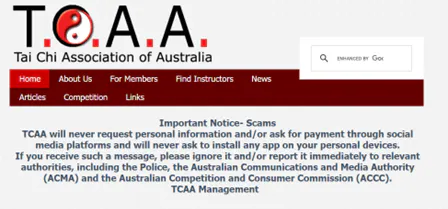
The Fake Tai Chi App Scam
Australians are being targeted with ads for ‘free’ Tai Chi classes on Facebook, and it’s not just hype. A client of ours saw one of these ads and was sent a WhatsApp link to an app called Australia Premium Club to manage bookings. The scammer even told him to call first, making it seem legitimate.
After installing the app on his Android, the client felt suspicious and uninstalled it, but scammers kept calling. Soon, $2,500 was taken from his NAB credit card to buy gift cards via PayPal. NAB warned his phone may have been compromised.
At IDCARE, we’ve seen 60 cases of this scam in the last six months, with average losses of $7,000 per person. Scamwatch has reported a surge in this type of fraud, prompting a nationwide ACCC alert. Notably, 85% of our clients affected were over the age of 55. We are also seeing walking and hiking groups being targeted in a similar way, showing scammers are broadening their reach among active older Australians.
Our Tips:
• Only download apps from official stores and verify the developer.
• Don’t call or share information with unknown contacts who push downloads.
• If you think your banking information is compromised, contact your bank immediately.

Ask IDCARE: ‘How safe is public wi-fi?’
Have a Scam, Identity, or Cyber-Related Question? Ask IDCARE!
Every day, IDCARE supports people affected by scams, identity theft, and cybercrime. Our team draws on extensive real‑world experience and deep insight into the online criminal environment to help individuals understand risks and take action.
In this edition ofCyber Sushi, we’re inviting you to submit your question - and the IDCARE team will answer it. Send your questions to[email protected].
Our question today comes from Yannick: ‘How safe is public wi-fi?’
Hi IDCARE,
I was just wondering if it’s OK to use public Wi‑Fi at places like shopping centres, cafés, and airports. I use it pretty often when I’m out, but I’m not sure how safe it actually is.
Are there any risks I should know about?
Answer:
Hi Yannick,
Public Wi‑Fi can be convenient, but it does carry some risks.
When you connect to Wi‑Fi networks in places like shopping centres, cafés, or airports, you often don’t know who set up the network or who else is connected to it. In some cases, cybercriminals can use unsecured or fake networks to intercept information being sent over the connection, such as passwords, messages, or personal details.
That doesn’t mean you should never use public Wi‑Fi, but it does mean you should be cautious.
If you do use public Wi‑Fi, consider these tips:
- Avoid accessing sensitive accounts, like online banking, superannuation, or email.
- Don’t enter passwords, credit card details, or personal information.
- Make sure websites are secure (look for ‘https://’).
- Turn off file sharing and Bluetooth when you’re not using them.
- Log out of accounts when you’re finished.
For safer browsing, using your mobile data or a trusted personal hotspot is often a better option, especially for anything involving personal or financial information.
Being aware of the risks and taking simple precautions can go a long way toward staying safe when you’re online.
Kind regards,
The Cyber Sushi Team
Join the global list of organisations making a real difference in people’s lives by supporting our service.





















































Copyright © 2025, IDCARE. All Rights Reserved.
ABN 84 164 038 966